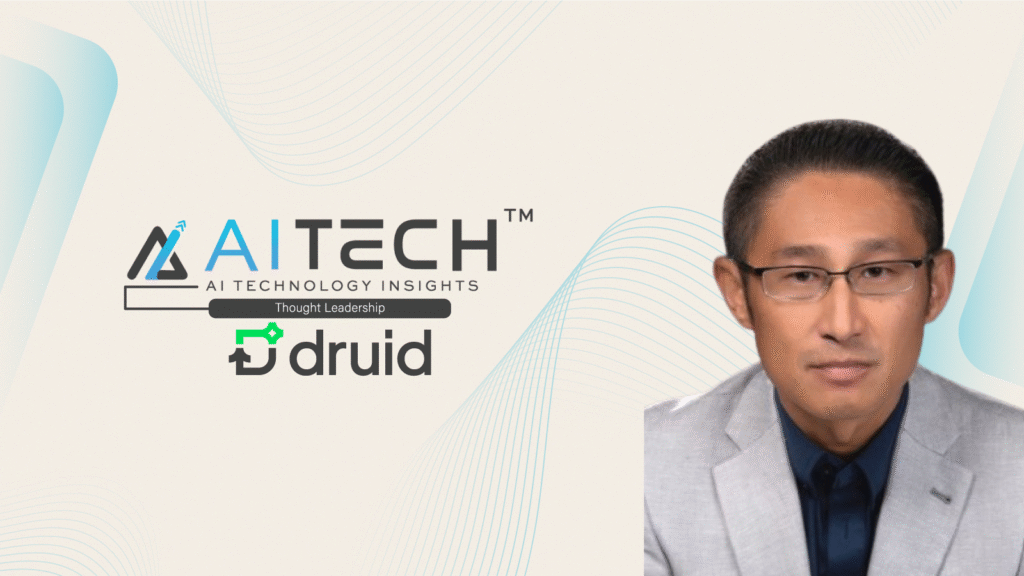

As industrial companies race to strengthen resilience, efficiency, and competitiveness, the conversation is shifting from disruption to enablement. Peter Weckesser, Chief Digital Officer at Schneider Electric, a global leader in energy management and automation, is at the forefront of this transformation.
Weckesser believes technologies such as AI, IoT, software, and digital twins are not just tools, but catalysts that are redefining how infrastructure, automation, and data centers are designed, managed, and optimized. From scaling AI across enterprise operations to creating sustainable, data-driven ecosystems, his perspective blends technological foresight with practical execution.
In this interview, we explore how Schneider Electric is leveraging next-generation technologies to unlock new value for industries worldwide, and what lessons other leaders can take from their digital journey.
Here’s the full interview.
AI Technology Insights (AIT): Hi, Peter. Welcome to the AI Technology Top Voice Interview Series. Please tell us about your current role at Schneider Electric and your journey in the industry.
Peter Weckesser: As Chief Digital Officer at Schneider Electric, I lead the company’s digital transformation strategy and execution globally. My focus is on embedding digital capabilities into our offers and operations through AI, IoT, software, and digital twins to create a more efficient, resilient, and sustainable future. Before joining Schneider Electric, I held senior leadership roles in companies like Airbus and Siemens, where I led large-scale digital programs that spanned engineering, operations, and customer service. My journey has always been centered on using emerging technology to drive business and societal value.
Recommended: AITech Top Voice: Interview with Carmit DiAndrea, Director, AI Data Management at NiCE
AIT: What are your key offerings? How do you use AI and ML to improve the overall product development lifecycle for your stakeholders?
Peter Weckesser: EcoStruxure™ is our IoT-enabled, plug-and-play, open, interoperable architecture and platform that enables embedded connectivity and intelligence across buildings, data centers, infrastructure and industry. At Schneider Electric, AI and machine learning are also deeply embedded across the entire product development lifecycle, from concept to deployment to ongoing optimization.
These technologies help us accelerate innovation, reduce engineering risk, and deliver tailored, high-performance solutions that adapt to real-world conditions. For instance, take our EcoStruxure™ Building Advisor. We leverage machine learning models trained on global building performance data to identify inefficiencies, predict failures, and automate diagnostics. That insight informs the product’s design and features, so instead of just collecting data, it delivers actionable recommendations that can reduce energy consumption by up to 30% and extend equipment life.
On the development side, AI-powered simulations allow us to validate designs faster by predicting how systems will behave under different environmental and usage conditions. Once deployed, solutions like Building Advisor continue learning in the field, feeding back performance insights that guide future product iterations and service enhancements.
In this way, AI and ML help us build a virtuous cycle where every step, from R&D to operations, becomes smarter, more sustainable, and more responsive to stakeholder needs.
AIT: Peter, you’ve described AI, IoT, software, and digital twins as strategic enablers — how do you see them intersecting to deliver measurable business value in industrial operations today?
Peter Weckesser: These technologies converge to create cyber-physical systems where virtual replicas called digital twins reflect the real-time status of physical assets. This fusion enables predictive insights, faster decision-making, and scenario modeling, especially critical in complex industrial environments. For example, in smart factories, this intersection enables us to simulate production changes before implementation, thereby reducing downtime and waste while enhancing agility and throughput.
AIT: How is Schneider Electric balancing innovation speed with resilience and security in its digital transformation of critical infrastructure, such as energy grids and data centers?
Peter Weckesser: At Schneider Electric, we understand that we must act with speed, but no matter how fast we move, cybersecurity has to always be on the top of our minds, especially when digitalizing critical infrastructure like grids, industrial facilities, and data centers. We adopt a “secure by design” approach in all our platforms, embedding cybersecurity controls from the device layer to the cloud, aligned with global standards such as IEC 62443 and ISO 27001.
We accelerate innovation through agile development and co-creation with partners, while applying rigorous testing under real-world conditions.
For example, our EcoStruxure™ solutions for microgrids and data centers combine AI, IoT, and automation to deliver predictive monitoring and real-time control, reducing downtime and improving operational resilience.
In the data center space, through a collaboration with Nvidia, we use digital twin modeling to optimize AI-driven facilities, improving energy efficiency by up to 20% and cutting design time by about 30%. These architectures are designed not only for performance, but also for secure integration into existing infrastructure.
By pairing rapid innovation cycles with embedded resilience, we ensure our customers can adopt advanced digital capabilities without compromising the safety, reliability, or compliance of their most critical assets.
Recommended: AITech Top Voice: Interview with Rick Rosenburg, VP for Government Solutions at Rackspace
AIT: What lessons have you learned in scaling AI and IoT from proof-of-concept to enterprise-wide adoption?
Peter Weckesser: The biggest lesson is that technology is only half the challenge. The other half is change management and business process transformation. Scaling requires breaking down silos, aligning incentives across departments, and building trust in AI recommendations. We’ve learned that embedding AI into daily workflows, not treating it as a parallel system, is key to adoption. Also, partnerships with customers, startups, and academia have helped us accelerate time-to-value.
AIT: Where do you see the most untapped opportunities for digital twins to optimize industrial assets and supply chains?
Peter Weckesser: Two areas stand out. First is energy infrastructure that goes from the grid edge to large AI data centers. Utilities can use grid-wide twins to stress-test protection schemes, rehearse outage and restoration scenarios, and speed up distributed energy resource interconnections, cutting planning cycles by weeks while improving reliability. “Virtual substation” models also let operators optimize MV/LV networks where EVs, solar, and flexible loads sit and deploy targeted controls without rolling a truck
Second is end-to-end supply chains. Digital twins can help manufacturers detect bottlenecks, simulate disruptions, and optimize inventory across global networks in real time. Schneider Electric’s own self-healing supply chain platform that is powered by AI, IoT, and machine learning has already delivered over €100 million in value, including significant inventory and yield improvements, showing the untapped potential of scaling these capabilities as digital twins.
AIT: How are AI-driven analytics and automation helping Schneider Electric advance both operational efficiency and environmental responsibility?
Peter Weckesser: AI is central to our mission of sustainability. Our platforms use real-time analytics to reduce energy consumption, optimize carbon footprints, and identify anomalies. For example, our EcoStruxure Resource Advisor helps companies measure and reduce emissions across their operations. AI also powers automation tools that help our clients shift from reactive to proactive maintenance, lowering material waste and extending asset life.
AIT: With the convergence of OT and IT, what new skills and organizational changes do industrial companies need to succeed?
Peter Weckesser: OT/IT convergence demands cross-functional teams that can bridge engineering, data science, and cybersecurity. Companies should invest in upskilling programs to foster hybrid talent, such as engineers who understand cloud platforms or data scientists familiar with industrial protocols. Organizationally, we’re seeing the rise of our Centers of Excellence that embed digital talent within business units to ensure adoption and scalability.
Recommended: AITech Top Voice: Interview with Stephen Senterfit, President at Smartbridge
AIT: How will automation, digital monitoring, and energy optimization shape the data center of the future?
Peter Weckesser: The data center of the future will be autonomous, predictive, and carbon-intelligent. Automation will reduce human error and labor costs. AI-driven monitoring systems will detect issues before they occur. And with integrated energy optimization, facilities will balance workloads and energy sources (including renewables) to reduce carbon emissions while maintaining uptime. Schneider’s EcoStruxure for Data Centers already delivers these capabilities today.
AIT: Which emerging technology or market shift do you expect will most influence industrial competitiveness over the next five years, and how is Schneider Electric preparing for it?
Peter Weckesser: Over the next five years, industrial competitiveness will be shaped by the convergence of software-defined automation, AI-native operations, and energy-efficient AI infrastructure.
Moving to open, hardware-agnostic control systems will let manufacturers reconfigure production in software. This accelerates upgrades and improves interoperability across multi-vendor environments.
At the same time, AI is becoming a first-class tool in engineering and operations. The next step is AI that continuously optimizes performance, guided by feedback from digital twins
Companies that combine these capabilities such as open automation, embedded AI, and sustainable infrastructure, will gain the speed, agility, and resilience needed to lead in the decade ahead.
AIT: What are your predictions for the future of AI-powered antivirus technology?
Peter Weckesser: As cyber threats grow more sophisticated, AI-powered antivirus tools will shift from signature-based detection to behavioral and predictive analytics. Future systems will combine endpoint monitoring, threat intelligence, and anomaly detection in real time. In industrial environments, AI will be key to identifying attacks that cross from IT to OT, making it essential to future-ready cybersecurity architectures.
AIT: One Schneider Electric resource (whitepaper, e-books, or case study) that you would recommend every IT and AI leader to refer to in 2025:
Peter Weckesser: I recommend that readers tune in to our AI at Scale podcast. The Schneider Electric AI at Scale podcast invites AI practitioners and AI experts to share their experiences, challenges, and AI success stories. Conversations maintained during the show provide answers to questions such as: How do I implement AI successfully and sustainably? How do I make a real impact with AI? The AI at Scale podcast features real AI solutions and innovations, all of them ready for businesses to harness and offers a sneak peek into the future.
AIT: Tag a person in the industry whose answers you would like to see in the AITech Top Voice interview series:
Peter Weckesser: Philippe Rambach, CAIO at Schneider Electric
Thank you so much for your time today! We look forward to having you again at our Top Voice Series.
Recommended: AITech Top Voice: Interview with Paul Walker, Field CTO at Omada
To share your insights, please write to us at sudipto@intentamplify.com