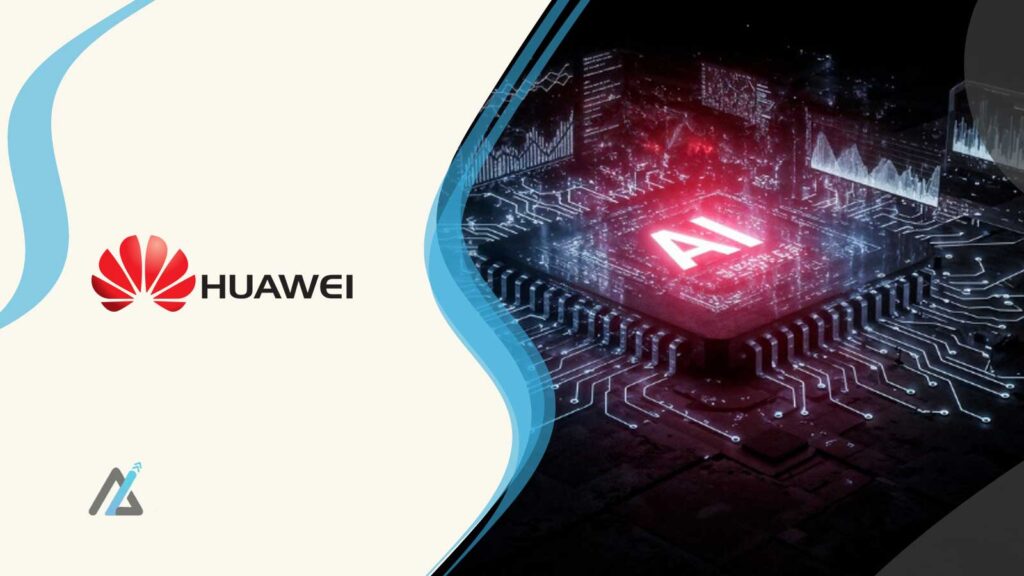
At the Mobile World Congress Barcelona 2026, Huawei introduced a new AI Data Platform during the Huawei AI DC Innovation Forum, aiming to help enterprises overcome critical challenges in deploying AI agents at scale. By strengthening the underlying data infrastructure, the company intends to enable organizations to move beyond experimental AI use cases and adopt practical, enterprise-grade intelligent systems.
As businesses increasingly integrate artificial intelligence into their operations, AI agents have become central to digital transformation initiatives. However, despite the abundance of enterprise data, many organizations continue to struggle with turning that data into actionable intelligence for AI-driven applications. In many cases, the lack of efficient knowledge acquisition, inaccurate data searches, and slow inference processes prevents AI agents from operating effectively in real-world environments.
AI Authority Trend: Huawei Launches AI WAN Solution to Boost Telecom Business Growth
During the forum, Xie Liming, President of the Flash Storage Domain of Huawei’s Data Storage Product Line, officially launched the AI Data Platform and highlighted how it addresses these industry challenges.
“Today, AI agents are at the heart of business transformation. Despite having vast amounts of data, many companies still struggle to deploy AI agents at scale.”
According to Huawei, the AI Data Platform integrates several key components including a knowledge base, KV cache, and memory bank all centrally managed through a unified control mechanism. As a result, enterprises can transform AI agents from demonstration models into reliable operational tools capable of handling complex business tasks.
To begin with, the platform enables organizations to build and search knowledge bases with high accuracy in real time. This capability allows AI agents to continuously detect updates in source data and convert raw information into structured knowledge almost instantly. Furthermore, the system supports multimodal data processing through lossless parsing and token-level programming, enabling highly accurate indexing and retrieval. Huawei states that this architecture can achieve knowledge search accuracy of more than 95 percent, significantly improving decision-making capabilities for AI-driven applications.
AI Authority Trend: Huawei Launches Xinghe AI Fabric 2.0 in Europe to Revolutionize DCNs
In addition, the platform introduces a KV cache mechanism designed to accelerate AI inference. By leveraging historical memory data, the system minimizes repetitive calculations during multi-step interactions. Consequently, enterprises can reduce latency, increase throughput, and support faster inference cycles, particularly in complex AI agent workflows that involve long reasoning loops.
Another key feature is the memory bank system, which enhances AI agents with continuous learning capabilities. During interactions, the platform captures both working memory and accumulated experience memory. This information can then be retrieved and shared across AI agents, enabling collaborative learning and progressive improvement in reasoning accuracy and efficiency over time.
Taken together, these innovations aim to solve one of the biggest challenges in enterprise AI adoption: the gap between experimental AI prototypes and scalable production systems.
Looking ahead, Huawei confirmed that it will continue expanding its investments in AI data infrastructure. The company also plans to work closely with global customers and technology partners to accelerate industry transformation, broaden real-world AI applications, and unlock the full value of enterprise data.
AI Authority Trend: Huawei Cloud Drives AI Innovation Across Industries at HUAWEI CONNECT 2025
To share your insights, please write to us at info@intentamplify.com