
In this edition of the AI Technology Top Voice Interview series, we sit down with Stephen Senterfit, President of Smartbridge, to discuss how AI is transforming enterprise operations. With decades of leadership in consulting and large-scale digital initiatives, Stephen brings a front-row perspective on how executives can harness AI not just as a tool, but as a strategic catalyst.
At Smartbridge, he is guiding organizations across the life sciences, public sector, energy, and healthcare sectors toward responsible AI adoption—while redefining how they operate, compete, and deliver value. Most recently, under his leadership, Smartbridge launched SmartbridgeGPT—a secure enterprise accelerator built on Azure OpenAI—designed to unlock knowledge, speed, and agility at scale.
About Stephen Senterfit: Stephen Senterfit is the President of Smartbridge, where he leads strategy, growth, and innovation across digital transformation initiatives. With extensive experience in consulting and enterprise technology, he has worked with organizations in industries such as life sciences, energy, public sector, and healthcare to help them adopt emerging technologies responsibly and at scale. His leadership is centered on aligning people, processes, and technology to reimagine how businesses deliver value. Stephen focuses on enabling organizations to build agility, trust, and competitive advantage in the modern digital era.
About Smartbridge: Smartbridge is a specialized Microsoft Partner and a consulting partner for Salesforce, UiPath, and Snowflake. Founded in 2003 and headquartered in Houston, Texas, Smartbridge partners with organizations across industries to deliver solutions in AI, cloud, data, automation, and enterprise applications. The company’s mission is to simplify transformation by combining deep technical expertise with business-driven strategy, empowering clients to achieve agility, efficiency, and sustainable growth.
Here’s the full interview.
AI Technology Insights (AIT): Hi, Stephen. Welcome to the AI Technology Top Voice Interview Series. To start, can you tell us a bit about your role at Smartbridge and what excites you most about the modern AI era?
Stephen Senterfit: As President of Smartbridge, I have the privilege of leading a team that helps organizations harness the full potential of digital transformation, with AI now at the center of that evolution. What excites me most about the modern AI era is that we’re entering a stage where AI is not just a tool for efficiency, but a catalyst for reinvention. We’re now seeing AI evolve into an agentic partner capable of reasoning, adapting, and driving entirely new possibilities for businesses. This shift is enabling organizations to break down data silos, empower their workforce, make real-time decisions, and reimagine customer and employee experiences.
What inspires me daily is helping our clients not just adopt AI but do so responsibly and in ways that give them a true competitive advantage in their industry.
Recommended: AITech Top Voice: Interview with James Taylor, Head of Enterprise Transformation Platforms at DXC Technology
AIT: How has your career journey shaped your perspective on digital transformation across critical industries?
Stephen Senterfit: My perspective on digital transformation is that it’s ultimately about business transformation with the customer at the center. The real impact comes when organizations align people, process, and technology not only to improve how they operate, but also to reimagine how they deliver value to their customers, shareholders, and market(s).
Transformation today is driving new business models, new customer experiences, and new ways of competing, not just more efficient operating models. When leaders put these principles at the core, digital becomes the catalyst for long-term growth and differentiation.
AIT: Smartbridge recently launched SmartbridgeGPT, a secure enterprise GPT accelerator on Azure OpenAI. How do you see it transforming knowledge access and operational agility across industries like construction, life sciences, public sector, energy, and healthcare?
Stephen Senterfit: We developed SmartbridgeGPT to demonstrate the “art of the possible” with AI, showing how secure, enterprise-grade generative AI can transform the way knowledge is accessed and applied.
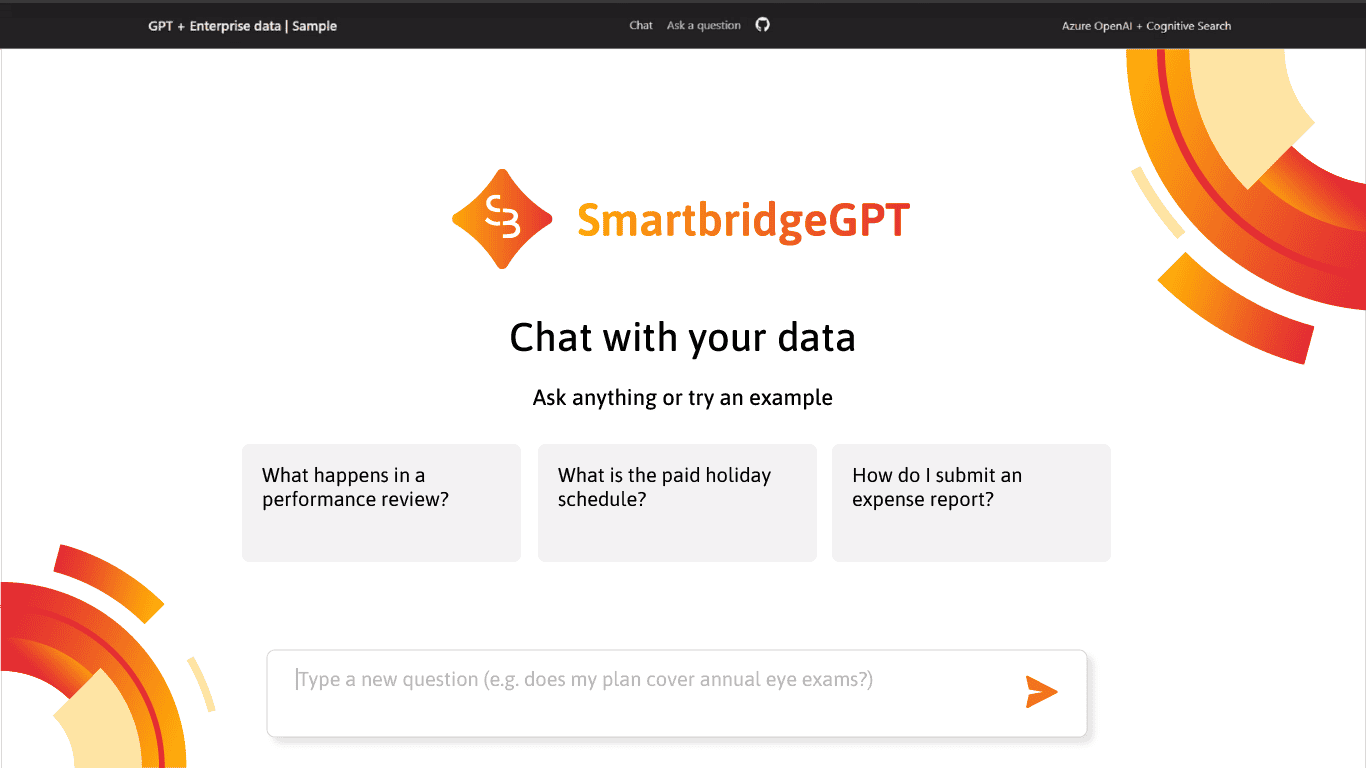
By putting information in natural language at employees’ fingertips, it reduces friction, speeds up decision-making, and enables teams to act with greater agility. Across industries, this means frontline workers, researchers, and leaders can spend less time searching for answers and more time making data-driven decisions. It’s more than a productivity gain; it’s a glimpse into how AI can reshape business models and improve business outcomes.
AIT: How are life sciences organizations leveraging emerging technologies like AI and advanced analytics to accelerate research, drug development, and compliance with regulatory requirements?
Stephen Senterfit: In the MedTech sector of Life Sciences, AI and advanced analytics are transforming how companies innovate and operate. Organizations are using AI to speed up product design, simulate device performance with digital twins, and analyze real-world patient data to refine therapies faster. Advanced analytics also strengthens regulatory compliance by improving traceability, automating documentation, and ensuring quality across the supply chain.
Together, these capabilities are helping MedTech firms shorten development cycles, bring safer devices to market, and create more personalized patient outcomes, while maintaining the rigorous standards the industry demands.
AIT: Public sector agencies often face the challenge of modernizing while working within legacy systems. What breakthroughs in data, cloud, or AI are enabling meaningful transformation in this space?
Stephen Senterfit: Public sector agencies are beginning to overcome the weight of legacy systems by embracing cloud, data platforms, and AI in targeted ways. Cloud provides the scalability and security needed to modernize without wholesale system replacement, while data integration platforms break down silos to give agencies a single source of truth.
AI is enabling more responsive citizen services, from chatbots to predictive analytics for resource planning, while also strengthening compliance and transparency. These breakthroughs are allowing agencies to modernize incrementally, reduce costs, and deliver services that meet the expectations of today’s citizens.
Recommended: AITech Top Voice: Interview with Dan McAllister, SVP of Global Alliances at Boomi
AIT: The energy sector is under intense pressure to innovate while meeting sustainability goals. What role do you see AI and predictive data models playing in advancing both performance and green initiatives?
Stephen Senterfit: AI and predictive data models are playing a pivotal role in helping the energy sector balance performance with sustainability. By combining real-time optimization with digital twins of wells, facilities, and supply chains, companies can simulate outcomes, anticipate issues before they occur, and make smarter decisions that lower costs and reduce carbon impact. These capabilities extend asset life, minimize downtime, and accelerate the transition to more sustainable operations.
It’s not just about efficiency; it’s about building a more innovative, resilient, and greener energy ecosystem.
Predictions 2026: Shaping the Next 3 Years
AIT: Looking across these industries, what common challenges do you see when it comes to adopting AI at scale, and how should leaders overcome barriers like data silos, governance, and trust?
Stephen Senterfit: The biggest challenges to adopting AI at scale aren’t technical; they’re organizational. Data silos, fragmented governance, lack of trust, and poorly selected use cases often slow progress more than the technology itself. Leaders can overcome these barriers by building strong data foundations, implementing responsible AI frameworks, choosing use cases that align with business priorities, and ensuring transparency in AI decision-making.
When governance, trust, and collaboration are prioritized, and the right use cases are pursued, organizations can move beyond isolated pilots to enterprise-wide impact.
AIT: From your vantage point, which industry is most poised for AI-driven disruption over the next three years, and what signals are you seeing in the market to support that view?
Stephen Senterfit: MedTech, oil and gas, and restaurants are all investing heavily in AI to reimagine how they operate and serve customers. From accelerating device innovation to optimizing energy production and reshaping dining experiences, AI is becoming a core driver of efficiency and differentiation.
The common thread is clear: AI is no longer experimental—it’s becoming the foundation for competitive advantage.
Advice to the emerging leaders
AIT: How do you personally approach guiding enterprise leaders to balance rapid innovation with the need for ethical, responsible, and secure data practices?
Stephen Senterfit: Leaders should view innovation and responsibility as two sides of the same coin.
Rapid innovation is only sustainable when it’s grounded in ethical, transparent, and secure data practices that build trust with employees, customers, and regulators. My approach is to help leaders establish strong governance frameworks early, select use cases that align with business priorities, and ensure transparency in how AI systems make decisions. When innovation and responsibility move in lockstep, organizations can scale AI with both speed and confidence.
AIT: What advice would you share with executives and technology leaders who are preparing their organizations for the next wave of digital transformation across critical industries?
Stephen Senterfit: My advice is to treat digital transformation as business transformation, with customers at the center. Technology alone won’t create lasting impact; success comes from aligning people, process, and technology to reimagine how value is delivered.
Executives should focus on building strong data foundations, choosing use cases tied directly to business outcomes, and fostering a culture of adaptability and trust. The organizations that thrive in the next wave will be those that embrace AI not just as a tool for efficiency, but as a catalyst for new business models and customer experiences.
Thank you so much for your time today! We look forward to having you again at our Top Voice Series.
Recommended: AITech Top Voice: Interview with Jonathan Kvarfordt, Head of GTM Growth at Momentum.io
To share your insights, please write to us at sudipto@intentamplify.com