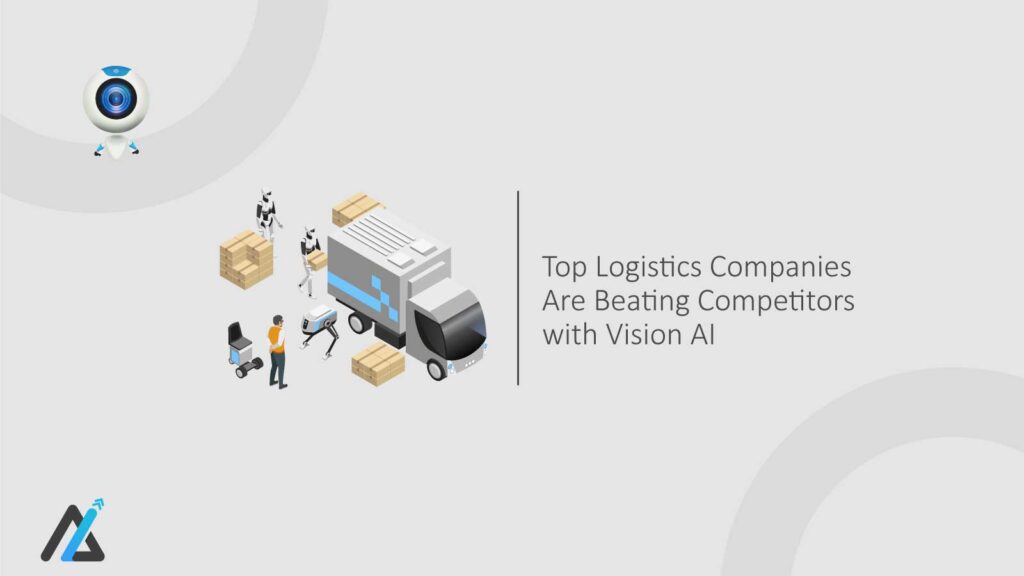
The logistics industry is undergoing a transformative shift, driven by the integration of Artificial Intelligence (AI) technologies. Among these, Vision AI stands out as a game-changer, enabling companies to gain real-time insights into their operations, enhance efficiency, and reduce costs.
Recent research by Lumenalta and Roboflow reveals that companies adopting Vision AI are significantly outperforming their competitors. This article delves into how Vision AI is reshaping logistics and why leading companies are embracing this technology.
The Visibility Challenge in Logistics
A staggering 94% of logistics companies operate with only partial visibility into their operations, leading to issues such as misrouted shipments, inventory overstock, and missed delivery windows.
These visibility gaps result in cascading costs that can add up to hundreds of thousands or even millions annually. Traditional methods, relying on manual tracking and siloed systems, often fall short in providing the speed and accuracy required in today’s fast-paced logistics environment.
Vision AI: A Strategic Advantage
Vision AI addresses these challenges by translating visual data into actionable insights in real-time. By integrating cameras, sensors, and AI models, companies can automate processes, detect anomalies, and make informed decisions swiftly. The impact is profound:
- 58% of Vision AI users report improved operational efficiency, outperforming peers using other AI tools.
- 48% experienced direct cost reductions after implementing Vision AI.
- 41% reported improved customer satisfaction through greater inventory accuracy and faster delivery times.
These statistics underscore the tangible benefits of adopting Vision AI in logistics operations.
Real-World Applications of Vision AI
Leading logistics companies are leveraging Vision AI across various facets of their operations:
1. Inventory Management
Automated cycle counting powered by Vision AI eliminates costly reconciliation errors, ensuring accurate stock levels and reducing the risk of stockouts or overstocking.
2. Loading Optimization
Real-time verification of loading processes prevents damage claims and delays, enhancing throughput and reducing operational bottlenecks.
3. Safety Compliance
Proactive monitoring through Vision AI reduces incidents and liability, ensuring a safer working environment and compliance with safety regulations.
4. Chain of Custody
Automated documentation ensures regulatory compliance, providing a transparent and auditable trail of goods movement, which is crucial for industries with stringent regulatory requirements.
Key Statistics on Vision AI in Logistics (as of 2025)
-
Enhanced Operational Efficiency
-
Cost Reduction Benefits
-
Accelerated Return on Investment (ROI)
-
Widespread Adoption
-
Market Growth

The ROI of Vision AI
One of the most compelling aspects of Vision AI is its rapid return on investment (ROI). Unlike traditional automation projects that can take months or even years to yield results, Vision AI deployments often generate measurable benefits in weeks. This accelerated ROI is attributed to several factors:
- Reduced Operational Errors: Automated detection of issues like damaged goods or misloaded pallets leads to fewer returns and customer complaints.
- Lower Labor Costs: Automation of repetitive inspection and monitoring tasks frees employees to focus on higher-value activities.
- Faster Throughput: Real-time insights enable smarter scheduling and quicker decision-making, leading to improved operational efficiency.
These factors contribute to a lower total cost of ownership (TCO) for companies adopting Vision AI.
Overcoming Implementation Challenges
While the benefits of Vision AI are clear, successful implementation requires careful planning and execution. Lumenalta’s research highlights common pitfalls:
- 87% of logistics leaders report internal AI skills gaps, emphasizing the need for expert partnerships.
- 88% of AI proof-of-concepts never progress to widespread deployment, often due to issues like insufficient data readiness, unclear ROI, and lack of in-house expertise.
To overcome these challenges, companies should:
- Partner with Experts: Collaborate with experienced AI solution providers to ensure alignment with real-world operations.
- Invest in Training: Equip internal teams with the necessary skills to manage and optimize AI systems.
- Focus on High-Impact Use Cases: Start with specific logistics problems where AI can directly reduce costs or improve service, rather than attempting broad, unfocused AI initiatives.
Future Outlook
As Vision AI continues to evolve, its applications in logistics are expected to expand. Emerging trends include:
- Integration with Other AI Technologies: Combining Vision AI with predictive analytics and natural language processing to create more comprehensive logistics solutions.
- Edge Computing: Processing data closer to the source to reduce latency and bandwidth usage, enabling real-time decision-making.
- Enhanced Automation: Further automation of complex logistics tasks, leading to more efficient and cost-effective operations.
Companies that proactively adopt these advancements will be well-positioned to lead in the future of logistics.
Role of Vision AI in Shaping the Future of Logistics
Vision AI is not just a technological innovation but also a strategic imperative for logistics companies aiming to enhance efficiency, reduce costs, and improve customer satisfaction. The findings from Lumenalta and Roboflow’s research underscore the significant advantages of adopting Vision AI, including improved operational efficiency, cost reductions, and enhanced customer satisfaction. As the logistics industry continues to evolve, embracing Vision AI will be crucial for companies seeking to maintain a competitive edge.
Seizing the Vision AI Advantage: Lead the Future of Logistics
In a world where speed, accuracy, and efficiency define competitive advantage, Vision AI is no longer optional; it is transformational. The logistics leaders of today are those who embrace real-time visual intelligence to optimize operations, reduce costs, and elevate service standards.
Integrating Vision AI will reshape your organization, empowering teams and delivering better outcomes for the people who rely on your services. Those who act decisively today will not only close the gap with competitors but set the benchmark for operational excellence, proving that innovation, insight, and impact can move in perfect harmony.
FAQs
1. What is Vision AI, and how is it transforming logistics?
Vision AI uses computer vision to analyze visual data in real time, helping logistics companies detect errors, optimize inventory, and improve operational efficiency. It transforms workflows by enabling faster decision-making and reducing costly mistakes.
2. Which industries are benefiting most from Vision AI in logistics?
Industries with complex supply chains, such as healthcare, retail, e-commerce, and manufacturing, are seeing significant gains in efficiency, cost reduction, and operational accuracy through Vision AI deployment.
3. How quickly can companies see ROI from Vision AI deployments?
Leading adopters report measurable ROI within weeks, thanks to rapid deployment and real-time impact on operations, compared to months-long returns from traditional automation projects.
4. What competitive advantages do Vision AI users have over peers?
Companies using Vision AI outperform competitors in efficiency, reduce operational errors, lower labor costs, and achieve faster throughput, creating a measurable competitive edge in logistics operations.
5. Can Vision AI integrate with existing AI systems and workflows?
Yes, Vision AI can seamlessly integrate with existing AI infrastructure, enterprise systems, and workflow tools, enhancing operational intelligence without requiring complete system overhauls.
Discover the future of AI, one insight at a time – stay informed, stay ahead with AI Tech Insights.
To share your insights, please write to us at sudipto@intentamplify.com.