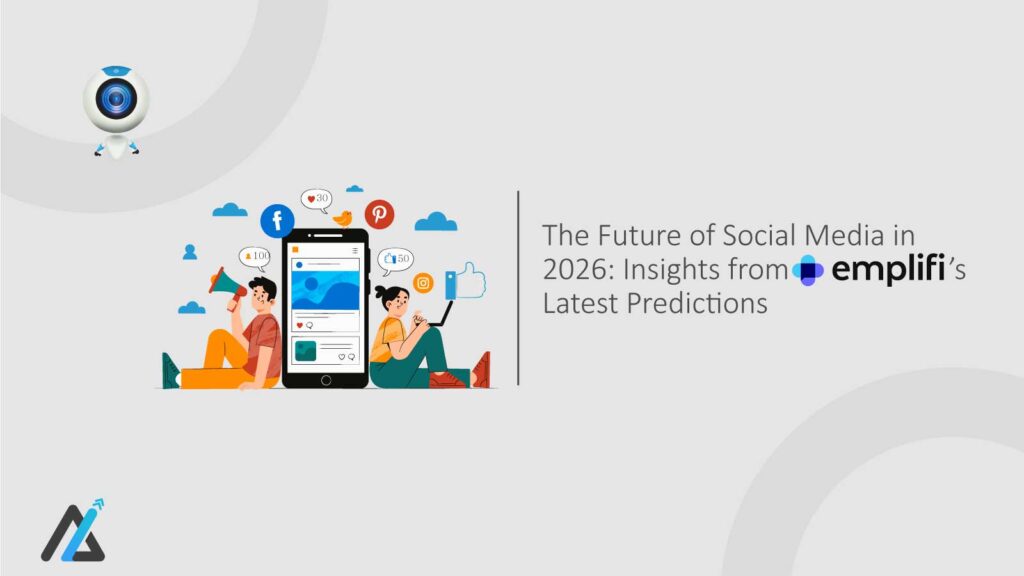
The social media landscape is shifting at a pace that feels almost cinematic. Every quarter brings a new platform trend, algorithm shift, or AI tool that reshapes how brands communicate. In this climate, leaders want clarity. They want a forecast they can trust. Emplifi’s latest predictions offer serious value.
These insights act as a compass for teams preparing for a year defined by AI-powered creativity, deeper customer engagement, and a more unified digital experience.
Marketing leader Gary Vaynerchuk captured the current mindset around AI adoption when he said, “AI has changed my life; it is now my copilot.” He explained to The Post that he relies on AI to research everything from political shifts to cultural trends, even down to why more people are wearing hats than ever before.
These forces are reshaping what teams prioritize, how content gets made, and where marketing budgets go. The year ahead promises a new level of AI-assisted execution and a renewed focus on human-centered storytelling. This article explores the six major shifts ahead for 2026.
Short-Form Video and UGC Will Shape Creative Priorities
Short-form video keeps dominating consumption habits. Emplifi’s findings state that 73 percent of marketers are prioritizing short-form formats like TikTok, Reels, and YouTube Shorts. You can see the pattern playing out every time a brand replaces polished studio content with a quick customer clip that feels natural and real.
Why is this happening?
Audiences want stories that resemble their daily lives. When a consumer shares a video of themselves using a product in a genuine setting, engagement almost always climbs.
User-generated content is becoming the creative engine behind high-performing campaigns. Emplifi’s latest predictions highlight that 47 percent of marketers now plan to invest more in UGC as part of their core strategy.
YouTube’s CEO, Neal Mohan, recently shared, “Short video represents one of the most exciting creative revolutions of our time because people can express so much in so little time.”
His point mirrors Emplifi’s data showing brand investment rising in TikTok, Reels, and Shorts. Leaders now recognize that short-form content is not a trend. It is a permanent communication format shaped by speed, personality, and authenticity.
Forward-leaning teams will start building structured UGC pipelines. Some will allow communities to co-create with brand voices. Others may deploy AI-assisted editing to scale volume without diluting authenticity.
Marketing Budgets Will Move to Instagram, YouTube, and TikTok
Advertising budgets follow attention. Social commerce is becoming a natural extension of consumer shopping behavior. Platforms with strong video capabilities enjoy more of this activity.
That is why budgets are shifting to Instagram, YouTube, and TikTok. Emplifi’s data shows a noticeable swing toward these channels for 2026. The tactic that wins is not repurposing one video across all platforms.
It is designed for each environment:
- YouTube Shorts reward fast-paced storytelling.
- TikTok rewards personality-driven narratives.
- Instagram rewards visual creativity.
Teams that understand these tempo differences will see higher conversion efficiency in the coming year.
Generative AI Will Move from Experimentation to Embedded Workflows
A few years ago, generative AI served as an experimental companion. Teams tested it for caption drafts or visual variations. That era is ending. In 2026, AI will operate as a core layer in marketing stacks.
Emplifi’s latest predictions reflect this shift. AI capabilities will not sit in pilot mode. They will sit inside daily workflows that run tasks in real time. These systems can analyze posting schedules, recalibrate ad spend, or rewrite creative variations based on audience response.
Think of it as the evolution from AI as an assistant to AI as a partner that manages repetitive tasks. As a result, strategists can spend more time guiding vision and less time wrestling with dashboards. This is one of the most important turning points ahead.
Virtual Influencers Will Support Human-Led Campaigns
Virtual influencers once looked like a passing trend. But they have matured into a smart strategic asset when used intentionally.
There has been a 30 percent decline in AI-only partnerships. That drop is not a warning signal. It is a course correction. Brands found that human voices still matter most. Virtual creators will simply play a supporting role. They can amplify reach, help prototype ideas, and complement human talent.
The key principle is authentic grounding. Transparency wins. So does audience awareness. Brand teams that balance these factors can leverage virtual creators to add creativity and experimentation across campaigns.
AI Automations Will Reduce Team Burnout
Marketing and customer care teams often manage dozens of tasks across multiple dashboards. Emplifi’s data shows that 52 percent feel burnout often. Another 24 percent feel it occasionally. These numbers reflect the intensity of digital operations today. AI-driven automation offers a way to shift this load.
By 2026, teams will rely on agentic automations that handle reporting, tagging, scheduling, routing, and message triage. McKinsey’s 2024 Productivity Report showed that AI can free up 20 to 30 percent of a marketer’s weekly workload by automating operational tasks. When that time is reclaimed, teams can think, ideate, and innovate at a healthier pace.
Imagine logging into a workspace where half your tasks are already handled by a system that knows your priorities and operating rhythm. That is where the industry is heading.
Social Marketing, Customer Care, and Commerce Will Merge
Customers want friction-free journeys. They want discovery, conversion, and service to happen in one continuous flow. Emplifi’s latest predictions indicate that two-thirds of social marketers already collaborate closely with customer care and commerce teams.
Those relationships will deepen in 2026. Social channels will function as the digital front door for the entire customer experience.
Research from Adobe shows that brands adopting unified analytics across marketing, service, and commerce see a 36 percent higher retention rate. The message is clear. Integration drives value. Social channels will anchor that integration and give teams a unified vantage point of consumer intent.
Former CEO of X, Linda Yaccarino, has emphasized the growing role of data clarity in modern digital ecosystems. She noted, “Real-time data is the new currency of connection because it tells us what audiences value in the moment.”
Her view aligns with the prediction that unified analytics across marketing, care, and commerce will define next year’s customer experience strategies.
Human-First AI Strategies for 2026
The year ahead will not be defined by the volume of new AI tools. It will be defined by the way leaders integrate them into experiences that feel meaningful and human.
Emplifi’s latest predictions shine a light on a future shaped by authenticity, agentic AI, and unified digital journeys. That combination will help brands work with more clarity and create content that resonates with real people.
Emplifi’s Chief Marketing Officer, Susan Ganeshan, will share additional insights into these 2026 social media projections during a webinar on December 9. The workshop will provide an in-depth look at emerging trends and strategic concerns for brands in the coming year.
FAQs
1. What makes Emplifi’s predictions important for 2026 planning?
They draw from data across global brands that use Emplifi tools. This gives leaders a clear view of where consumer behavior and AI workflows are heading.
2. Why is short-form video becoming the top creative format?
People consume it faster and engage with it more. Brands gain stronger visibility when they use natural storytelling formats.
3. How will AI reduce workload for social teams?
AI takes over repetitive tasks like scheduling and reporting. This gives teams more time to focus on strategy and creative work.
4. Will virtual influencers replace human creators?
No. They act as a supplement. Human voices remain central to trust and engagement.
5. How can brands prepare for the rise of agentic AI?
Start by mapping repeatable tasks. Choose AI tools built for automation and integrate them into workflows step by step.
Discover the future of AI, one insight at a time – stay informed, stay ahead with AI Tech Insights.
To share your insights, please write to us at info@intentamplify.com