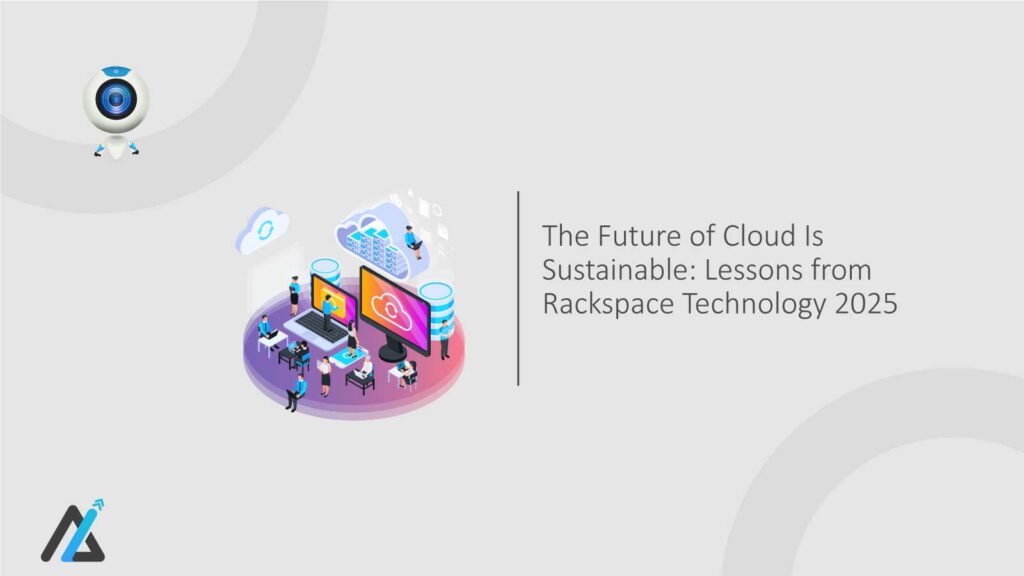
Rackspace Technology’s 2025 Sustainability Report underscores how a cloud and AI leader can translate corporate responsibility into measurable environmental and social impact. With validated science-based targets and an ambitious roadmap to achieve net-zero emissions by 2045, Rackspace is positioning itself as one of the few global technology providers embedding sustainability into every layer of its operations, from data centers and workforce empowerment to responsible AI innovation.
Aligning Cloud Innovation with Climate Goals
In its latest sustainability report released on October 21, 2025, Rackspace Technology shared significant milestones in its journey toward sustainable digital transformation. The company achieved a 10% total emissions reduction from its 2023 baseline, a notable feat in a sector known for high energy intensity.
This progress is now validated by the Science Based Targets initiative (SBTi), confirming that Rackspace’s near-term and long-term greenhouse gas (GHG) reduction goals align with the United Nations Sustainable Development Goal 13.
“Sustainability is now a measurable part of how we run the company,” said Gajen Kandiah, CEO of Rackspace Technology. “The same discipline shows up in how we help customers lower costs and carbon. We will continue to report with clear data, independent reviews, and strong governance.”
Key Progress Highlights from the 2025 Report
Rackspace’s sustainability progress touches all aspects of its business, operations, purpose, and people.
1. Emissions Reduction and Energy Efficiency
- 10% total emissions cut from 2023–2024, with a 20% drop in Scope 1 and 2 and a 9% reduction in Scope 3.
- 80% of data centers are powered by renewable energy, with plans to reach 100% renewable coverage through RE100 partnerships.
- DFW data center upgrades saved 1,700 MWh annually via automation and smarter energy management.
- Headquarters relocation in San Antonio reduced facility emissions by 80%, saving over 6,000 tons of CO₂e in a single year.
2. Verified ESG Accountability
Rackspace strengthened its carbon accounting through third-party audits, introducing a double materiality assessment that examines both environmental impact and business resilience.
3. Responsible AI and Circular Technology
Rackspace co-authored SustainableIT.org’s “IT Toolkit for Responsible and Sustainable AI,” offering frameworks for deploying ethical, low-carbon AI systems.
It also introduced a Circular IT Lifecycle Policy that promotes recycling and upcycling, resulting in a 31% reduction in IT services emissions and 1,200+ devices donated to underserved communities.
Purpose Beyond Profit: Building a Responsible AI Ecosystem
Rackspace’s leadership extends beyond carbon targets; it’s redefining what “responsible AI” looks like in enterprise settings.
By combining AI readiness with sustainability education, the company has trained over 95% of its workforce in AI principles, ensuring every employee understands how intelligent systems can drive both efficiency and ethics.
Its 13,000+ technical certifications across cloud providers (AWS, Azure, Google Cloud, Oracle, VMware, SAP, Cisco, and more) show how Rackspace is empowering its people to engineer sustainable digital infrastructures for clients worldwide.
Additionally, the company’s social impact programs continue to scale; $8 million raised through the Rackspace Foundation supports 10,000+ students in STEM education, while 23,000 volunteer hours reflect its deep community commitment.
AI and Cloud Efficiency: A Model for Sustainable IT
Rackspace’s sustainability strategy demonstrates how AI and hybrid cloud can become key enablers of sustainability rather than contributors to the climate burden.
By optimizing data center operations with AI-driven automation, Rackspace has achieved substantial power and cooling efficiencies. These solutions are now being extended to clients, helping them reduce carbon costs alongside operational costs.
This represents a shift in the cloud economy: sustainability is not an optional add-on but a core value proposition that drives innovation, competitiveness, and trust.
Looking Ahead: Net-Zero by 2045
Rackspace’s long-term net-zero target spans Scopes 1, 2, and 3, covering direct operations, energy use, and supply chain impact. The company plans to neutralize residual emissions through carbon removal and verified offsets by 2045.
As more cloud service providers face regulatory and stakeholder pressure to report ESG outcomes, Rackspace’s transparent, data-verified reporting model could set a new industry benchmark.
Its focus on renewable energy contracting, responsible AI governance, and circular asset management positions it as a credible leader in the green cloud revolution.
Rackspace Technology 2025 Report Reframes the Future of Cloud
Rackspace Technology’s 2025 Sustainability Report is more than an environmental update; it’s a strategic blueprint for a cleaner, smarter cloud ecosystem. By merging AI-driven innovation with science-based accountability, Rackspace is proving that the future of cloud computing is inherently sustainable.
As global industries race to decarbonize, Rackspace’s transparent progress and responsible AI leadership set a powerful precedent: true digital transformation must also mean planetary transformation.
FAQs
1. What is the main highlight of Rackspace’s 2025 Sustainability Report?
Rackspace achieved a 10% reduction in total emissions and received SBTi validation for its science-based targets, confirming alignment with global climate action frameworks.
2. How does Rackspace use AI for sustainability?
Rackspace integrates AI into data center management and operational efficiency, using automation to cut power consumption and optimize cooling, while also co-authoring industry toolkits for responsible AI governance.
3. What are Rackspace’s renewable energy goals?
Currently, 80% of Rackspace data centers run on renewable energy. The company aims to reach 100% renewable coverage through long-term Power Purchase Agreements (PPAs) and RECs.
4. When does Rackspace aim to reach net-zero?
Rackspace has committed to achieving net-zero across Scopes 1, 2, and 3 by 2045, including carbon removal for residual emissions.
5. How is Rackspace contributing to social and workforce development?
Through the Rackspace Foundation, the company has raised over $8 million for education and supported 10,000+ students in STEM. Additionally, 95% of employees are AI-certified, preparing them for a sustainable tech future.
Discover the future of AI, one insight at a time — stay informed, stay ahead with AI Tech Insights.
To share your insights, please write to us at sudipto@intentamplify.com.