A shift in enterprise software evaluation is starting to emerge in customer service. Ahead of Relate 2026, Zendesk has already begun communicating something more important than product announcements. It is setting expectations for how customer service software will be evaluated.
Service platforms were once communication systems designed to manage interactions. As AI begins interpreting customer intent and suggesting outcomes, these platforms are moving toward operational decision systems.
Zendesk’s leadership messaging ahead of Relate 2026 indicates the company expects buyers to recognize that change. Rather than introducing AI as an enhancement, the company is positioning it as the operating model of service.
This discussion functions as market positioning ahead of the highly anticipated conference happening in May.
What Relate 2025 Had Revealed Last Year
Before we head into Relate 2026, let’s recall what happened at the conference held last year.
At Relate 2025, Zendesk introduced its AI-powered Resolution Platform, positioning it as a shift from ticket handling toward measurable issue resolution. The company emphasized that service performance should be evaluated by outcomes, not interaction volume.
The platform combined next-generation AI agents, enhanced copilots, a large service-specific knowledge graph, workflow automation tools, and deeper enterprise integrations.
Zendesk also highlighted new governance controls that gave visibility into AI reasoning, along with expanded measurement tools designed to score and analyze both human and AI interactions.
Beyond customer service, Zendesk extended its AI strategy into contact center capabilities and internal employee service, signaling broader ambitions across enterprise operations.
Zendesk was recognised as a Leader in the CRM Customer Engagement Center category in the 2025 Gartner Magic Quadrant, reinforcing that customer service platforms are now being evaluated as strategic operational systems rather than communication tools.
Service Platforms Enter the AI Operating Era This Year
In a recent conversation, Zendesk’s CEO, Tom Eggemeier, acknowledged that the company was initially slow to move aggressively into AI and made a deliberate decision to accelerate when the market began changing faster than expected.
The organization, he explained, had to rethink its investments and operating priorities to match the pace of the transition.
Eggemeier described the shift from traditional software to AI as a transition defined by both speed and impact.
CEO and Member of the Board, Eggemeier, on leading Zendesk through an AI-first transformation:
“Zendesk is expecting nearly 50% of bookings this year to be AI-driven. We closed 2025 with $200M in AI ARR and strengthened our roadmap with targeted acquisitions. Zendesk is truly operating as an AI-first company.”
These numbers signal the company now sees AI not as a product category but as the basis of its business model.
For enterprise buyers, this changes the interpretation of upcoming announcements. Instead of new tools, the company is preparing customers for new operating assumptions. Service systems will increasingly participate in decisions rather than simply manage workflows.
The Technology View: Four Trends Reshaping Service
CTO Adrian McDermott described broader market forces shaping Zendesk’s investments and positioning. The implication is that the company’s roadmap is reactive to structural changes in how customer interactions occur, not simply internal innovation.
Customer service platforms are moving toward predictive and context-aware behavior. Systems analyze conversation history, intent, and patterns to determine recommended actions before an agent intervenes. This marks a change in the role of enterprise software. Instead of supporting human decision-making, software begins to share responsibility for it.
Research across enterprise AI deployments shows decision-support capabilities increasingly embedded inside operational applications, particularly communication-heavy environments such as service operations.
Zendesk’s messaging aligns with that pattern. The platform is being positioned as a system that interprets customer context and suggests outcomes rather than merely routing requests.
The Operational View: Why the COO Perspective Matters
COO Craig Flower framed the transition in operational terms. He emphasized that AI enables service to become more immediate, measurable, automated, and personalized.
This description signals a governance shift.
When service interactions are automated and measurable in real time, organizations no longer manage customer support purely as staffing operations.
They manage it as an operational risk and performance environment. A service interaction can influence retention, expansion revenue, and brand perception simultaneously.
Chief Operating Officer, Craig Flower, shared:
“I’m thrilled to be stepping into the COO role at such an important time for Zendesk. With AI enabling service that is more personalized, more immediate, more measurable, and more automated, service is truly becoming AI-first, and so are we.”
Zendesk’s focus on accelerating AI impact indicates the company expects adoption challenges to move from technical implementation to organizational oversight. The question becomes less about deploying automation and more about supervising decisions generated by automated systems.
This is a significant change for enterprise leadership. Service platforms begin influencing business outcomes directly rather than supporting them indirectly.
The Market Context: Why Service Is the First AI Function
Customer service is one of the earliest enterprise functions to transition toward AI-native operations because it combines structured records, unstructured communication, and measurable outcomes.
Industry data reflects this movement:
- 81% of consumers believe AI is now part of modern customer service.
- Two-thirds of business leaders report performance improvements from AI in service operations.
- 59% of consumers expect AI to significantly change interactions within two years.
- More than half of customers say they will switch brands after a single poor service experience.
These metrics explain why vendors are investing heavily in service AI. Customer interactions are no longer post-sale support activities. They are behavioral data streams tied directly to revenue.
Support That Sees Ahead and Acts Before Customers Ask
Zendesk’s own strategy commentary reinforces this interpretation. The company has described a set of structural changes shaping customer service, including proactive support and systems capable of anticipating customer needs before requests are submitted.
The important point is not technological capability. It is an operating model change. Service platforms increasingly interpret context and surface recommended actions rather than wait for customers to initiate contact.
This suggests the company is preparing customers to treat service platforms as real-time customer intelligence environments rather than communication systems.
What Relate 2026 Is Likely To Demonstrate
The conference, scheduled for May 18–20 in Denver, will include product updates and leadership presentations.
However, the leadership messaging indicates the announcements will likely focus on implementation of a broader shift.
Expect emphasis on:
- Autonomous service agents.
- Predictive resolution workflows.
- AI copilots for agents.
- Outcome-based performance metrics.
- Deeper enterprise integrations.
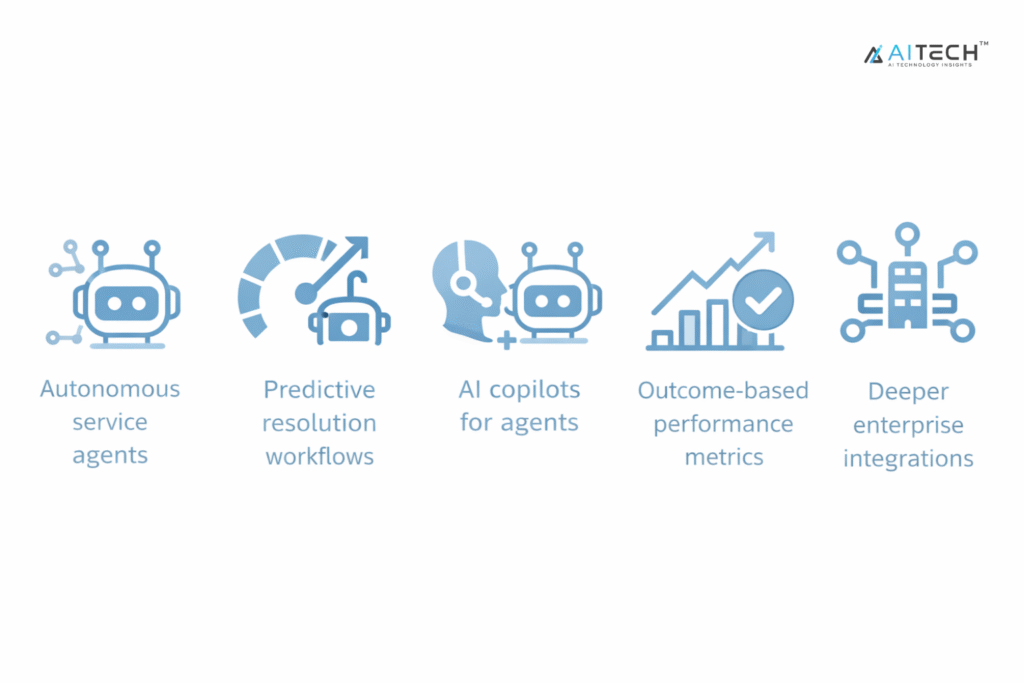
Rather than presenting isolated capabilities, the company appears positioned to demonstrate how service operations can function as a continuous decision environment.
Strategic Implications for Enterprises
The practical impact extends beyond customer support teams. Customer service systems now surface early indicators of retention risk, adoption friction, and expansion readiness.
In many organizations, these signals appear earlier than sales pipeline data.
Sixty percent of consumers report purchasing from a company specifically because they expect good service.
As a result, service platforms are becoming relevant to revenue planning and operational forecasting. Organizations that integrate service insights into business decision processes gain earlier awareness of both opportunity and risk.
Key Takeaway
Zendesk is preparing enterprises to evaluate service platforms as operational decision systems. The change is conceptual. Customer service moves from a cost center to a decision environment.
Relate 2026 will likely clarify how this transition is implemented. The broader message, however, is already visible. Software that once managed customer interactions is beginning to guide business actions.
Organizations evaluating customer experience technology should begin defining ownership of interaction data, integrating service insights into planning processes, and establishing governance for AI-generated decisions.
FAQs
1) How is AI changing customer service software platforms?
AI is shifting service platforms from ticket management tools to decision engines. Systems now interpret customer intent, recommend next actions, automate resolutions, and generate operational insights that directly affect retention and revenue performance.
2) Why are enterprises treating customer service as a strategic function instead of a cost center?
Customer service now produces real-time behavioral data about churn risk, product adoption, and expansion opportunities. Leaders use this information to forecast revenue, prioritize product improvements, and guide customer success strategy, making service a business intelligence function rather than support overhead.
3) What does an AI-first customer experience platform actually mean?
An AI-first CX platform embeds machine learning into core workflows instead of adding automation on top. The system predicts issues, assists agents, resolves routine problems autonomously, and continuously learns from interactions to improve operational decisions across the organization.
4) How will AI in customer support affect enterprise governance and leadership roles?
As systems begin influencing customer outcomes, accountability shifts upward. Leaders must establish policies for automated decisions, audit AI recommendations, and coordinate service, operations, and revenue teams to oversee how AI impacts customer relationships and compliance.
5) Why is customer service becoming the first enterprise department to adopt operational AI?
The service combines structured records, conversational data, and measurable outcomes, making it ideal for machine learning. Organizations can quickly evaluate impact through resolution speed, satisfaction, retention, and upsell signals, allowing faster ROI validation than most other business functions.
Discover the future of AI, one insight at a time – stay informed, stay ahead with AI Tech Insights.
To share your insights, please write to us at info@intentamplify.com