
Application security is evolving quickly. So are the expectations placed on the teams responsible for it. As AI accelerates software delivery and expands the attack surface, traditional testing and scanning models are proving insufficient for managing real-world risk. Leaders are no longer asking how many vulnerabilities exist.
They are asking which ones actually threaten the business. That shift toward outcomes over activity is driving renewed focus on application security posture management (ASPM), and it explains why Apiiro’s progress in 2025 warrants closer examination.
Application Security at AI Scale
AI adoption materially increased the amount of code entering production. Industry research shows nearly half of AI-generated code samples contain security weaknesses, while open-source dependency consumption has surged into the trillions annually, expanding exposure faster than manual review processes can realistically scale.
As OpenAI co-founder and former Anthropic CEO Dario Amodei observed in 2025,”I think we will be there in three to six months, where AI is writing 90% of the code. And then, in 12 months, we may be in a world where AI is writing essentially all of the code.”
Apiiro’s reported 104 % Annual Recurring Revenue (ARR) growth in 2025, driven in part by expansion within Fortune 500 organizations, signals more than just commercial traction. It reflects a shift in how large enterprises are allocating budget toward security platforms that promise continuous posture insight, automated risk prioritization, and measurable reduction in critical exposure rather than incremental improvements in scanning coverage.
Apiiro meets this need by combining its patented Deep Code Analysis (DCA) technology with a real-time, code-to-runtime software graph, enabling enterprises to design, develop, and deliver secure software faster.
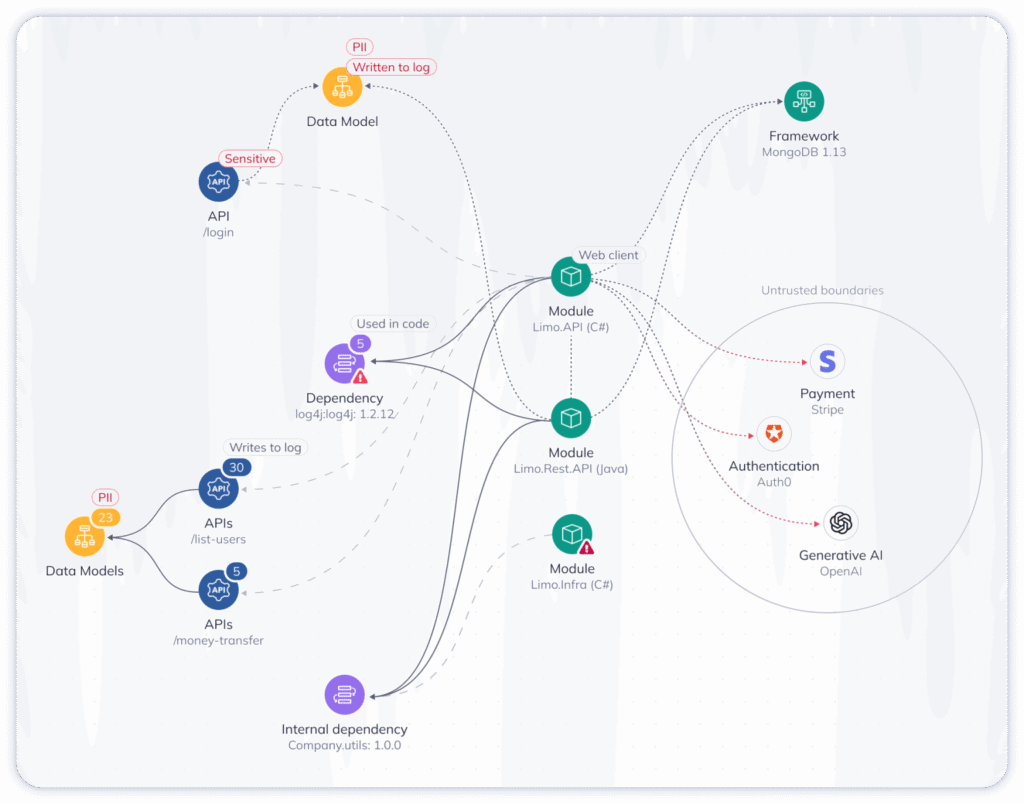
In that context, posture-centric approaches are emerging not as an optional architectural improvement, but as a necessary evolution. By connecting code, dependencies, and runtime exposure into a unified risk model, posture intelligence helps organizations distinguish between noise and meaningful risk. It enables prioritization that reflects not just severity scores, but real business impact.
Apiiro at the Center of Posture-Driven Security
The industry’s pivot toward ASPM is not semantic. It reflects a deeper shift in what security leaders are trying to solve.
Apiiro’s trajectory aligns with broader market behavior. Its architecture, centered on deep code analysis and software graphs, treats the application as a connected system rather than a collection of files. That perspective mirrors how risk actually propagates in production environments.
Apiiro ranked #1 in Application Security Posture Management (ASPM) in the 2025 Gartner Magic Quadrant for Application Security Testing (AST), validating its posture-centric approach against industry criteria.
This repositioning underscores that modern AppSec success is measured not by sheer volume of detections but by the ability to translate risk into actionable, context-driven outcomes for the business.
Structural Drivers of Apiiro’s Momentum in 2025
Independent evaluations from Gartner, IDC, and Frost & Sullivan converged on the same conclusion in 2025. Application security posture management is no longer an emerging niche. It is becoming the structural layer enterprises depend on to manage software risk at scale.
Across each assessment, ASPM capabilities such as contextual risk correlation, lifecycle visibility, and automated remediation were treated as primary differentiators rather than supplemental features.
Apiiro’s consistent placement near the top of those rankings positioned it not simply as a strong vendor but as a representative of where the category itself is heading. For enterprise buyers, that alignment carries practical weight.
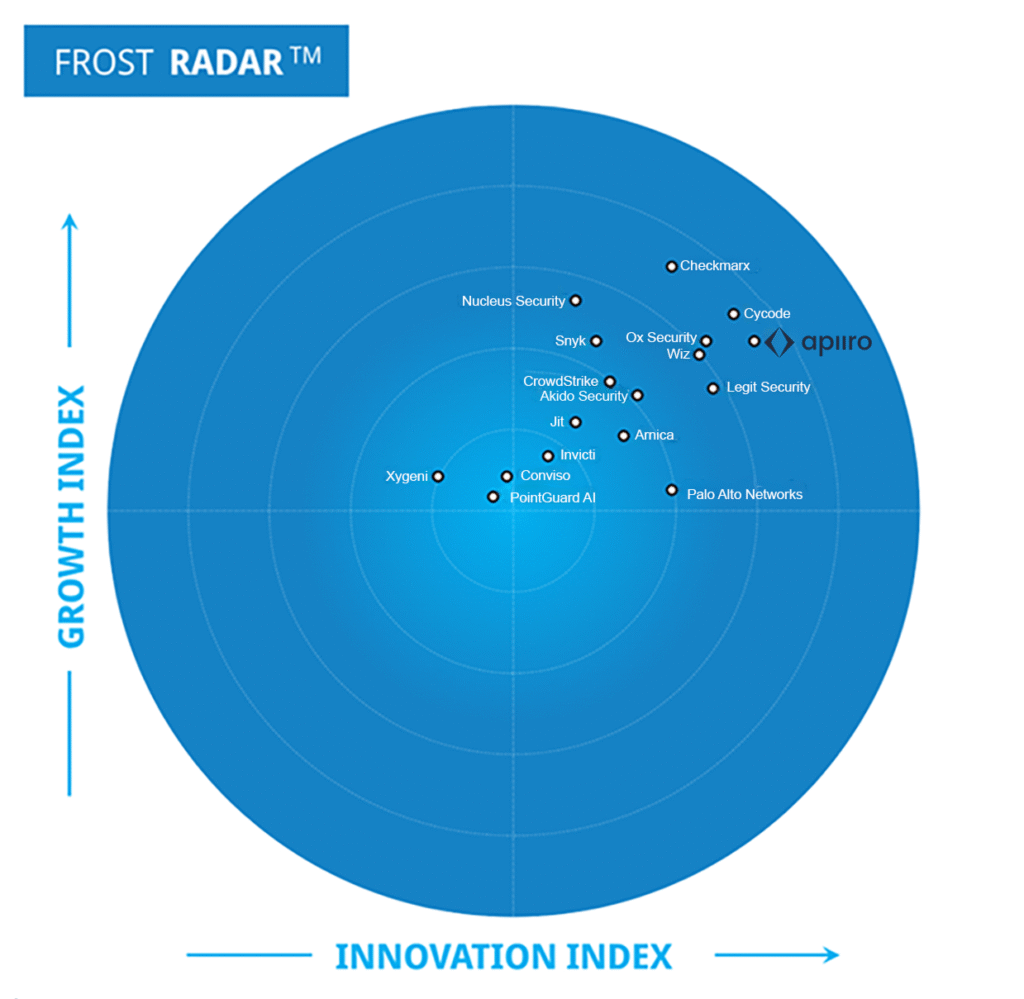
In the 2025 Frost Radar™ for Global ASPM, Apiiro was named the most innovative ASPM provider worldwide, reinforcing that multiple analyst firms independently identified its approach as a benchmark for innovation in posture-centric application security.
Recognition does not create adoption on its own, but it materially lowers perceived execution risk, and in enterprise security, perceived risk often determines whether budgets are released at all.
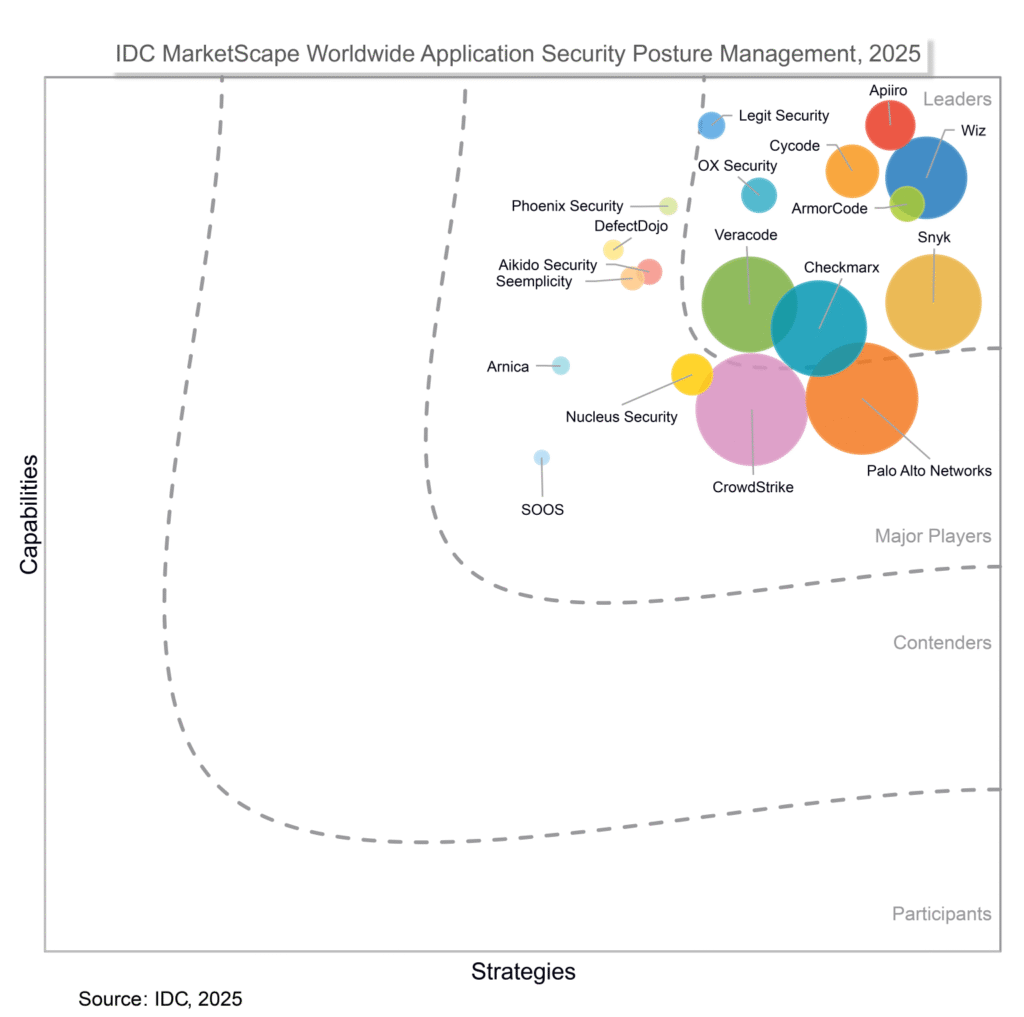
Apiiro Positioned as a Leader in the 2025 IDC MarketScape
Positioning as a Leader in the IDC MarketScape: Worldwide Application Security Posture Management Vendor Assessment carries weight beyond simple recognition. IDC’s framework evaluates vendors on both capability maturity and long-term strategic alignment, including continuous visibility across the SDLC, contextual risk prioritization, and the ability to operationalize remediation at enterprise scale. In other words, the criteria reflect how well a platform supports day-to-day execution, not just technical breadth.
Apiiro’s placement in the Leader category signals that its posture-centric model, combining code intelligence, dependency awareness, and runtime context, aligns with what large organizations increasingly view as foundational for modern AppSec programs.
This type of third-party validation reduces perceived adoption risk. It indicates that the platform is not experimental or niche, but architected for sustained, production-grade use across complex environments.
Application security is shifting away from isolated scanning tools toward continuous posture management. Apiiro’s leadership position reflects that transition, positioning it not simply as a competitive vendor but as a representative of where the category itself is stabilizing.
The Path Forward for Application Security
Application security is shifting from fragmented detection to continuous posture intelligence. Away from reactive triage toward proactive prioritization. Away from isolated tools toward integrated platforms.
Viewed through a broader lens, Apiiro’s 2025 progress is less about one company’s momentum and more about where the discipline itself is heading.
The enterprises seeing results are those aligning with that trajectory. In an environment defined by accelerating software delivery, practicality wins. That is the real story behind application security in 2025.
FAQs
1. What is Application Security Posture Management (ASPM), and why does it matter now?
ASPM provides continuous visibility into application risk across code, dependencies, APIs, and runtime, then prioritizes issues based on real business impact. It matters now because AI-accelerated development has made periodic scanning insufficient.
2. How is AI changing application security risk for enterprises?
AI increases development speed and code volume, which expands the attack surface faster than manual security reviews can keep up. More releases, more dependencies, and more automated code generation mean traditional triage models break down.
3. Why are enterprises consolidating their AppSec tools into platforms?
Point tools create fragmented alerts, duplicate findings, and unclear ownership. Consolidation improves visibility, accountability, and remediation speed while lowering operational complexity and cost.
4. How should CISOs measure AppSec effectiveness in 2025 and beyond?
Effectiveness should be measured by outcomes, not activity. Key indicators include a reduction in critical exposure, faster remediation cycles, fewer production incidents, and clearer risk reporting to leadership. Vulnerability counts alone no longer reflect true security posture.
5. Where does Apiiro fit into the shift toward posture-centric security?
Apiiro aligns with the move from detection-heavy scanning to continuous posture management. Its platform connects code context, runtime exposure, and automated remediation to help teams prioritize and fix the risks that matter most.
You can refer to our resources section here for latest Apiiro whitepapers and guides
Discover the future of AI, one insight at a time – stay informed, stay ahead with AI Tech Insights.
To share your insights, please write to us at info@intentamplify.com