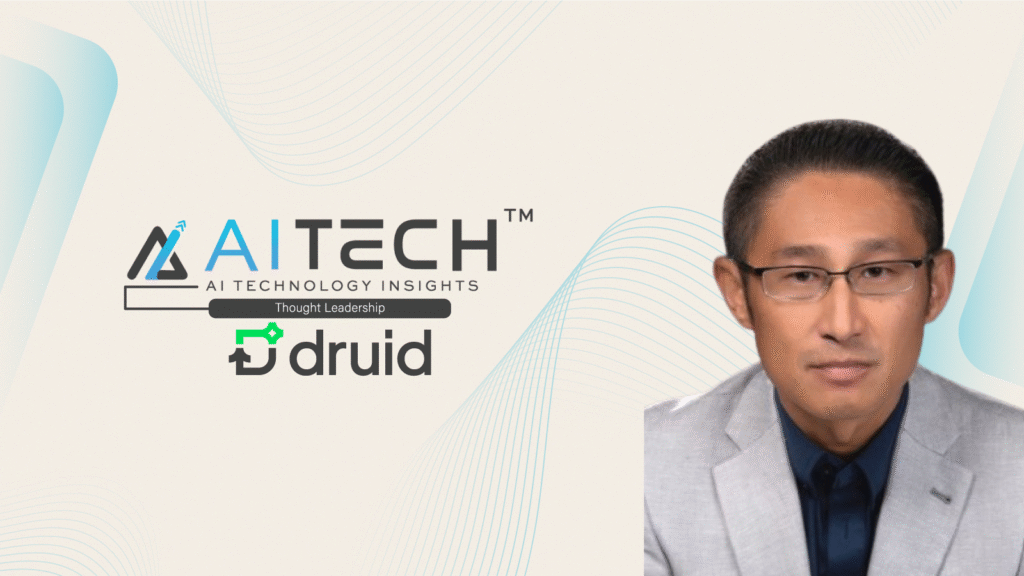

Welcome to another edition of AITechnology Top Voice, where we spotlight the leaders shaping the future of AI across industries. Today, we’re thrilled to feature Brian Fitzgerald, Growth Strategist (former CMO and Chief Revenue Officer) at Augury—a company redefining industrial operations through the transformative power of AI.
In an era where manufacturing is undergoing rapid digital evolution, Augury stands at the forefront by combining machine health, process health, and cutting-edge agentic AI to create smarter, more resilient operations. With over half of its workforce dedicated to AI development, Augury isn’t just implementing AI—it’s building a future where factories are proactive, not reactive.
This conversation with Brian couldn’t come at a more critical time. As global manufacturers grapple with increasing complexity, demand variability, and the pressure to scale sustainably, Augury is proving how AI can be leveraged not only to predict failure but to optimize every layer of production. In this interview, Brian shares exclusive insights into Augury’s AI roadmap, the company’s recent growth strategy post-funding, and why consultative partnerships are key to AI adoption in manufacturing.
Here’s the full interview.
AI Technology Insights (AIT): Hi Brian, welcome to the AI Tech Top Voice interview series. Please tell us about your role at Augury and how you arrived here.
Brian: Thanks for having me!
I’ve been involved with Augury for about six years through a large part of its growth and evolution into the company that it is today. Over that time, I have led sales, marketing, and strategy, helping build all those functions within the business and serving as part of the senior leadership team. Over the last year or so, I’ve moved into a role that’s more closely focused on growth strategy. It’s less operational and more about working with the leaders of those different functions to continue to drive business growth. It’s been a rewarding journey so far, especially given how dynamic the AI landscape is and the level of impact Augury has been able to have for its customers.
Recommended: AITech Top Voice: Interview with Heather Pringle, CEO at Space Foundation
AIT: 90% of our audience consists of C-level executives looking to explore AI-related technology solutions. Tell us about Augury’s AI product roadmap and the size of your AI development and engineering team.
Brian: All of our roadmap is an AI roadmap in a sense. We’ve been building and driving an AI-based strategy, originally for machine health and now also for process health, for well over a decade. If you look at our engineering team, everybody pretty much has a hand in developing an end-to-end solution to turn AI into a highly effective solution for manufacturing. Today, we have teams that are focused on agentic AI and some of the newer general-purpose AI capabilities, but our entire innovation and engineering development function is built around leveraging AI in conjunction with human expertise to transform what’s possible in manufacturing.
Our roadmap goes in a few directions. One is what we call leveraging newer AI capabilities, like agentic AI and the ability to use some of the newer general-purpose AI models to add more depth and context to our solutions. At the same time, we continue to drive and lead in the machine health and process health spaces, which require specialized uses of AI to solve specific problems for our customers related to, for example, machine maintenance or reliability. That’s the second direction. The third is tied to coverage. Manufacturing environments are complex. They’re comprised of thousands of machines, dozens of processes, and variability, hundreds of SKUs and product variants. Coverage is the ability to apply AI solutions like Augury’s to more and more of these problem sets, machine types, process types, and so on, to deliver business impact more broadly across the customer’s organization and achieve our goal, which is to be their strategic partner for all these problems.
About half of our company – close to 200 people – is involved in AI development and engineering.
AIT: What are the company’s plans for Sales and Innovation, post-funding a few weeks ago?
Brian: On the sales side, it’s really about our ability to be a consultative partner for our customers. Our customers are trying to figure out how to use all these new solutions, how AI fits into their strategy, and how to apply these new capabilities in ways that deliver real business value. When we look at our sales team and pre-sales team at Augury, we’re investing in people who can partner with our customers on developing overall strategy and then bringing that strategy to life inside the customer’s environment. At the same time, we’re increasing our scope of partnership because we realize we’re not the only company in our customers’ ecosystems, and so we’re exploring multiple dimensions of partnerships. Partnerships allow us to either integrate into solutions our customers are already using, or work with companies that are already delivering services into their factories at the plant level. We need to meet customer needs at the plant level while also serving as strategic partners as our customers roll out AI programs globally—it’s a challenging task, especially when supporting some of the world’s largest manufacturers.
On the innovation side, we’re exploring three new tactics. First, we’re driving specialized uses of AI into process, machine, and production health. Second, we’re integrating newer AI capabilities with a focus on agentic AI and natural human language interfaces. These will enable people to basically talk to their factory and get the answers they need in real time. Manufacturing doesn’t lack for data- the problem is getting it into usable context and integrated in ways that can solve complex problems- AI can help to do that. The third approach we’re piloting is finding ways to take the data and insights that we’re collecting, which are profound and fairly unique in manufacturing, and then allowing our customers to use these insights as part of a broader solution via our APIs and other integrations. A production line must work seamlessly at high speed to deliver value- the data flows and insights that can help that must work at the same pace and with the same seamless integration.
Recommended: AITech Top Voice: Interview with Max Vermeir, Senior Director of AI Strategy at ABBYY
AIT: You are among the few companies that integrate AI + IoT. Could you please highlight the outcomes achieved through this unique technical integration?
Brian: Augury’s journey to becoming an end-to-end, full-stack solution started when we realized that we needed a lot of high-quality data to accurately predict machine failures. After all, AI models are only as strong as the data that powers them. Yet, this data was not readily available. So, we started to collect that data ourselves.
Oftentimes, the manufacturing equipment that factory engineers are trying to monitor is 20 years old.
Through our end-to-end solution we can take the least digital piece of equipment in the customer’s environment – a machine – and we make it one of the most digital pieces of equipment instantly by putting a sensor on it that tied to our cloud infrastructure. So, integrating our own AI and IoT enabled us to do just that.
The IoT sensors we build “listen” to machines and collect temperature, vibration, and magnetic data. This data is then put into our library of machine sounds, which empowers our AI models to reliably detect early warning signs of machine faults. 14 years after our founding, we now have over 500 million hours of this data, making it the largest collection of machine fault data in the world. Thanks to this library and the data validity it provides, we’ve proven our ability to conduct thorough analyses of our customers’ manufacturing equipment and deliver predictive insights with a high level of confidence and accuracy. When you talk about AI, trust is one of the key attributes people look for. Our IoT and AI combined to make us the most trusted industrial AI provider on the market.
Additionally, as a full-stack solution, we can identify problems our customers can’t solve themselves because they don’t have the data. Low RPM machines are a good example. They operate extremely slowly. They don’t throw off a lot of vibration data. Typical, traditional predictive maintenance solutions had a hard time predicting outcomes for those machines. At Augury, we were able to apply our historical solutions and data library with our sensing technologies, along with other technologies, into these environments to develop an offering and new algorithms that we can create to solve a real, pressing problem for customers – which is predicting future performance of these low RPM machines.
AIT: What kind of engineering expertise should a user have to extract maximum benefit from Augury? What kind of tech support do you offer to the customers?
Brian: One of the things we realized very early on is that we needed to help customers apply very sophisticated AI solutions in environments where the users really aren’t that technical. Therefore, our solutions are designed to be intuitive for non-technical users on the customer side. Oftentimes, the Augury solution is the first digital solution that the users or technicians on the factory floors have handled, and they’re able to get a high level of value without having deep engineering expertise.
We also have human expertise in the loop with our own vibration analysts and customer success teams that partner with our customers to interpret the data or to make sure they’re evolving their processes so that they’re changing how they work, taking advantage of the insights we provide.
As you get into more sophisticated use cases, we have eight sets of APIs that our customers can work with to drive data out to connect to other systems, whether those might be CMMS systems or higher-order business systems. We can work with our customers’ IT teams or provide partners who manage those processes as well. At the end of the day, customers can get a lot of value without a lot of in-house technical expertise. If they have those skills, our experts can work with their experts to deliver results, but it’s really designed to deliver fast time-to-value without a steep learning curve.
AIT: How does the R4000-series sensor’s self-healing connectivity improve the overall reliability and performance of machine health monitoring in industrial settings?
Brian: One of the biggest challenges in wireless condition monitoring is connectivity. When a sensor fails to send data to the cloud, it increases the risk of that machine being unmonitored – and hence the risk of missing a failure. Because IoT has a lot of moving parts – sensor, gateway, cloud connectivity, the surface area for signal loss is quite large at each step of data transmission. Enter self-healing connectivity. By enabling sensors and gateways to route and re-route data packets to find the best, uninterrupted path to the cloud, we minimize the immediate risk of unmonitored machines while reporting and alerting plants and Augury support to IoT connectivity issues. This allows for uninterrupted coverage until the IoT connectivity issues are resolved and improves the overall reliability and performance of machine health monitoring in industrial settings.
Recommended: AITech Top Voice: Interview with Max Vermeir, Senior Director of AI Strategy at ABBYY
AIT: What specific benefits does the R4000-series provide in wet environments, and how does it ensure consistent data collection in such challenging conditions?
Brian: When sensors operate in wet environments, they are susceptible to water ingress – or water entering the sensor. This can disable the sensor, causing the equipment to go unmonitored while a replacement is secured. While most wireless condition monitoring sensors have IP ratings (IP 66, 68, 69, etc) – these are insufficient since the IP tests are in lab conditions under pre-determined conditions – conditions which may not at all mirror the reality in a plant, say a pulp processing plant which has constant water washdown. In most cases, the only option that has existed is a completely sealed sensor that has non-replaceable batteries which make them unsuitable for plants that want to be able to replace a battery (and not the entire sensor).
The R4000-series is designed to withstand these extreme conditions with a unique double O-Ring seal and design that dramatically reduces the risk of water ingress while permitting battery replacement. In extreme wet conditions, we went a step further and created the R4000-WR, which is a completely sealed sensor without replaceable batteries.
To be clear, all the R4000-series sensors are IP 66/68/69 rated, however, they were co-designed with plants that operate in these wet environments. The result is a sensor that holds up in those wet conditions.
AIT: How does Augury plan to continue evolving its AI technologies to stay ahead of emerging threats in the ever-changing landscape of machine maintenance automation?
Brian: In some ways, manufacturing evolves very slowly in terms of the equipment itself. These capital equipment pieces are meant to last decades, sometimes.
At the same time, the competitive environment and technical landscape on top of those tools is evolving rapidly, and so Augury must as well.
We’re continuing to move up the stack and help customers integrate their teams to provide higher-order solutions. That means following our customers up the chain, so once we’ve helped them get control and predictability on reliability and maintenance, can we now help them get control and predictability on the overall process itself? We want to help them push the envelope on the goals they set for themselves and set new goals with them on efficiency, cost, speed, quality, etc, by always being alert to the new machinery types that are coming into the manufacturing environment.
We’re always looking ahead to the next problem our customers are going to want to solve and looking at how we can apply our solutions to that.
AIT: What are your predictions for the future of AI-powered machine health monitoring?
Brian: The impact AI delivers is so powerful that it will eventually become essential to how we do manufacturing. Every piece of equipment will be monitored in some fashion so that it will become the standard of operating a factory, just like a company would not exist today without email or some kind of financial control system.
AI will become a copilot or partner to factory floor workers.
Consider a new worker. Labor is hard to find, but a young person new to the job can ask the AI copilot to help them understand where potential reliability problems might exist on the factory floor, or why product quality is drifting from the ideal outcome, recommend how they should prioritize those issues and provide insights that outline how to fix the problems. This accelerates the pace by which a team becomes productive, and improves safety, job satisfaction and efficiency.
These tools will become embedded and sort of disappear into the environment. Manufacturing customers will increasingly not even realize they’re talking about AI. They’ll simply be interacting with their factory in new ways, where, in a sense, the factory becomes almost a proactive element of the discussion and a partner itself in improving outcomes.
AIT: Tag a person from the industry whose answers you would like to see in this series:
Brian: Dave Penrith
Thank you so much, Brian, for your time and consideration.
Recommended: AITech Top Voice: Interview with Wendy Gonzalez, CEO at Sama
To share your insights, please write to us at sudipto@intentamplify.com
Brian Fitzgerald brings over 30 years of expertise in high technology marketing and business leadership. As a writer, category builder, and dynamic leader, Brian has had the privilege of working with some of the brightest minds and most accomplished leaders in technology and business. His career has been enriched by collaborations with an endless parade of interesting, successful, and driven individuals from diverse walks of life and across the globe. Known for his strategic vision and commitment to teamwork, Brian continues to inspire growth and innovation wherever his leadership takes him.
About Augury:
 A leader in Machine Health and Process Health solutions, Augury helps manufacturing and industrial companies eliminate production downtime, improve process efficiency, maximize yield, and reduce waste and emissions. Powered by purpose-built AI technology, trained by industry experts and the world’s largest data library, our global customers achieve 5X-20X ROI. Our mission is to transform how people and machines work together to push the boundaries of human productivity.